Gulf economies suffer brunt of Iran war as recession risk looms | US-Israel war on Iran News

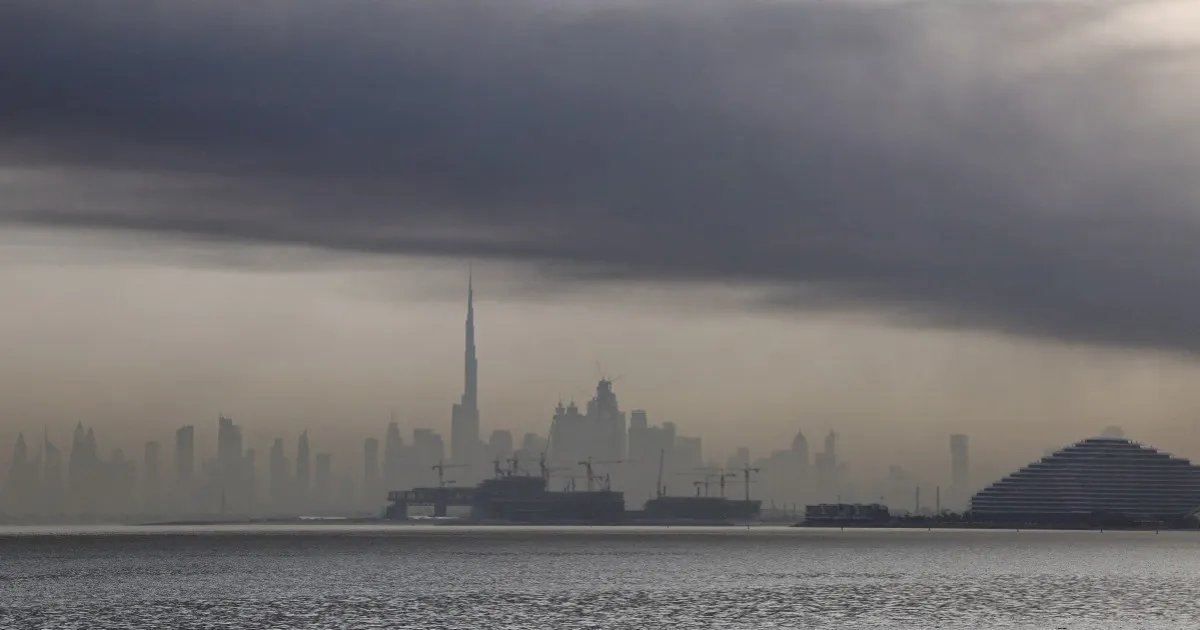
As the economic fallout of the United States and Israel’s war with Iran reverberates across the globe, the economies of the Gulf are suffering some of the worst damage.
Iran has launched continuous attacks on Gulf states since the onset of the conflict on February 28, arguing that it is attacking military bases used by the US for the war. Gulf nations have rejected Tehran’s claims, insisting the attacks on them are unjustified.
Recommended Stories
list of 4 itemsend of list
The Iranian strikes have upended energy production and inflicted major disruptions to tourism and travel, putting the region at risk of some of the most severe economic harm since the 1990-1991 Gulf War.
“Disruptions to aviation, tourism, shipping routes and energy exports combined with higher insurance premiums and freight costs mean the region is likely losing hundreds of millions of dollars per day in economic activity,” said Khaled Almezaini, an associate professor of politics and international relations at Zayed University in Dubai in the United Arab Emirates.
“The exact scale will depend largely on how long disruptions to trade routes, ports and airspace continue.”
After more than two weeks of war, the economic impact on the region has already been substantial.
Middle Eastern oil producers’ daily output declined from 21 million barrels to 14 million barrels after a little more than a week of conflict as they deal with the closure of the Strait of Hormuz, according to Rystad Energy.
Output is expected to drop substantially further if commercial shipping continues to avoid the strait due to Tehran’s threats. Rystad Energy predicted a decline to 6 million barrels per day in a worst-case scenario.
While US President Donald Trump has said “numerous” countries stand ready to help Washington secure the waterway with their navies, no government has yet confirmed its involvement while several have ruled out deploying warships for the effort.

Despite significant economic diversification in recent decades, the members of the Gulf Cooperation Council – Qatar, Kuwait, Bahrain, Saudi Arabia, the UAE and Oman – still rely on oil production for nearly one-quarter of their gross domestic products (GDPs).
Qatar, Kuwait and Bahrain are especially exposed to the disruptions due to their limited access to export routes that bypass the strait, said Yesar Al-Maleki, a Gulf analyst at the Middle East Economic Survey (MEES).
“Saudi Arabia and the UAE are somewhat better positioned because both have invested in infrastructure that allows them to partially bypass the strait,” Al-Maleki said, pointing to Saudi Arabia’s East-West Pipeline and the UAE’s pipeline to Fujairah, which can transport roughly 5 million barrels and 1.8 million barrels per day, respectively.
Goldman Sachs estimated that Qatar and Kuwait could see their GDPs plunge 14 percent if the war lasts until the end of April with the UAE and Saudi Arabia facing contractions of 5 percent and 3 percent, respectively.
At the same time, however, S&P Global Ratings, a leading ratings agency, has affirmed a “stable outlook” for Qatar, adding that the country’s “large financial buffers should enable sufficient fiscal and external space to offset the impacts of adverse geopolitical developments, including temporary disruptions to the production and export of LNG,” or liquified natural gas.
Meanwhile, Capital Economics suggested that GDPs in the region could fall 10 to 15 percent if the conflict lasts at least three months and causes lasting damage to energy infrastructure.
Iraq, which borders the Gulf but is not a member of the GCC, has also been hit hard by the energy crisis.
Peter Martin, head of economics at Wood Mackenzie, said the Iraqi government has been losing about $3bn in daily revenues based on an estimated 70 percent decline in petroleum output.
“The duration of production constraint is key to the economic impact but highly uncertain,” Martin said.
“Assuming Iraq were to suffer a 10 percent year-on-year decline in oil production in 2026, we estimate that GDP could contract by 3.5 percent this year.”

While energy remains the economic lifeblood of the Gulf, the war has spilled over into other critical sectors, particularly tourism and travel, a growing sector that accounts for about 11 percent of the GCC’s GDP.
Airspace closures and restrictions led to 37,000 flight cancellations from February 28 to March 8 alone, according to aviation analytics firm Cirium.
On Tuesday, UAE authorities briefly instituted a total closure of the country’s airspace, citing “rapidly evolving regional security developments”.
The announcement came a day after Dubai International Airport, normally the world’s busiest international gateway, was forced to suspend flights after a drone attack on a nearby fuel depot. Qatar Airways, meanwhile, has slowly started special flights and is ramping up their frequency although none of the Gulf carriers has reached pre-war levels of aviation traffic.
In an analysis published last week, the World Travel & Tourism Council estimated that the conflict was costing the region $600m in daily spending by international visitors.
“The fact that for now over a fortnight most tourist bookings, conferences, sporting events, etc have had to be cancelled will concretely represent massive costs to the region’s travel sectors and hotels and hospitality sectors,” said Emilie Rutledge, an economics lecturer at The Open University in the United Kingdom.
“How many tens of thousands of Europeans and Asians would have come through Doha, Dubai and Abu Dhabi in the past 15 days had it not been for America and Israel’s war on Iran?” Rutledge said.

Al-Maleki, the analyst at MEES, said the economic fallout could be comparable to historic regional crises if the war drags on.
“In the near term, the scale of disruption may resemble the economic shock experienced during the pandemic while a sustained closure could approach the magnitude of the economic fallout seen during the 1991 Gulf War,” he said.
Almezaini at Zayed University said he sees a Gulf-wide recession as being unlikely, pointing to the extensive fiscal reserves that many countries can turn to to withstand short-term shocks.
While the risk of a downturn will rise if the war goes on for weeks, “the more likely base case is weaker growth and a delayed recovery rather than a broad, deep contraction, especially for larger economies such as the UAE and Saudi Arabia,” Almezaini said.
“If tensions de-escalate relatively quickly, the region is well placed for activity to normalise faster than many expect,” he said.