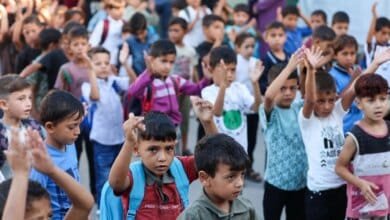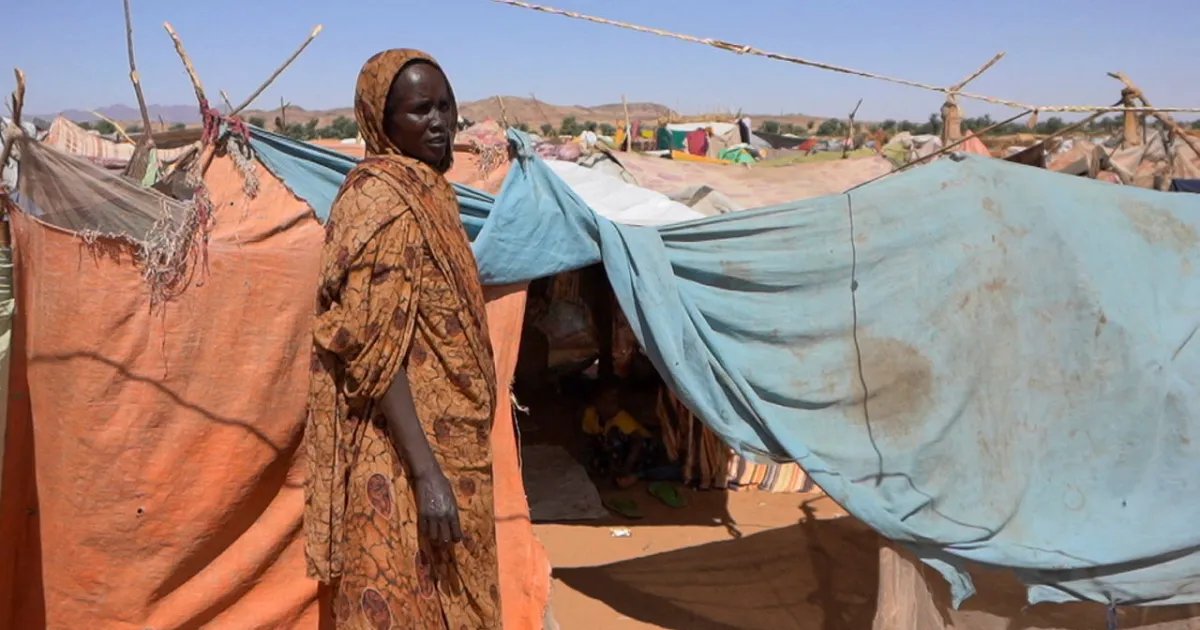
Blue tents stand in tight rows at the Daba Naira camp in Tawila, 68 kilometres west of el-Fasher, the capital of North Darfur in Sudan, racked by war.
The tents were set up by the International Organization for Migration (IOM), with support from the Turkish Disaster and Emergency Management Authority.
Recommended Stories
list of 3 itemsend of list
Relief teams have erected 3,000 new tents in recent months, but the number is negligible compared with the needs of more than 665,000 displaced people, the IOM said in a statement.
The most pressing question remains: how can this number of tents possibly be enough for hundreds of thousands of displaced people, especially when rainfall threatens to turn the low‑lying ground into swamps?
Promises of aid
Abdelbagi Mohamed Hamid, the minister of social welfare and humanitarian affairs coordinator in the Darfur region, told Al Jazeera Arabic that the regional government appealed to donors, including the Turkish ambassador, to provide tents for the displaced.
As a result, Turkiye allocated 30,000 tents to be distributed in Darfur and Kordofan through the IOM. Abdelbagi said 3,000 of 6,000 expected tents were erected in the Daba Naira camp in Tawila. Another 2,450 were delivered to the Salam, al‑Wihda and al‑Nakheel camps in Shaeria locality in South and East Darfur.
The minister said the Malha locality had the greatest need for humanitarian assistance in Darfur, followed by Tina, Karnoy and Um Baru areas. The Tina border crossing should be opened to allow the delivery of aid to these isolated areas, which suffer from acute shortages of food, medicine and fuel, while the war has deepened their isolation and worsened their humanitarian situation, he said.
Abdelbagi warned that providing shelter alone is not enough to confront the crisis, given the looming danger of famine, which could prove deadlier than the war itself, as humanitarian organisations struggle to reach many affected regions.
Worn‑out tents
The arrival of the new tents coincided with the beginning of the rainy season and an outbreak of fires sweeping through displacement camps, increasing the suffering of displaced people living under tattered canopies without protection from wind and rain, amid acute shortages of food, clean water and healthcare.


The IOM warned of persistent and worsening humanitarian needs in Tawila, as services deteriorate and diseases like cholera spread amid a lack of clean drinking water, resulting in watery diarrhoea and skin infections. The camps are overcrowded and lack basic sanitation.
The organisation, while continuing to expand the number of shelters in the Daba Naira camp, cannot keep up with the rapid pace of displacement.
‘Dropping like flies’
Ahmed Mousa, a displaced man from el-Fasher who is staying in the Daba Naira camp, told Al Jazeera that the new tents do not cover even a tenth of the camp’s needs, with people sleeping in the rain in the open and children falling ill without adequate care.
Fatima Ibrahim, a displaced woman in the same camp, said people fled el-Fasher in search of safety – only to find themselves exposed to the elements, hunger and disease.
“We see the new tents from afar, but they are not enough. We are dropping like flies from hunger and disease. Our children fall ill before our eyes, and we don’t even have medicine,” she said, adding that many families slept on bare ground without protection from the cold of night and the heat of day.
Famine ‘may be more dangerous than war’
The Minister of Agriculture in the Government of Darfur region, Al‑Sadiq Barango, told Al Jazeera in a statement that the famine may be more dangerous than the war, amid declining seasonal rains and the drying of agricultural lands and livestock pastures.
He says the war has driven farmers to abandon their land, while cultivated areas, particularly fruit farms and cash‑crop plantations, have been attacked and destroyed by armed groups.
Barango described the situation as “ominous signs of a looming catastrophe,” and called for urgent humanitarian intervention, as starvation threatens thousands of people across Sudan, with Darfur the most affected due to years of conflict and the collapse of agricultural infrastructure.


‘Tawila is not just numbers’
Tawila hosts about 665,000 displaced people, most of whom fled el-Fasher and its surroundings, according to the IOM’s statement. Their number had more than doubled between March and September 2025, from 238,000 to more than 652,000.
More than 70 percent of households in Tawila lack healthcare, while half of families have been unable to obtain treatment, according to the organisation’s estimates. Children under the age of five and pregnant women are the most affected, with rising rates of malnutrition and infectious diseases.
Adam Rijal, spokesperson for the Coordination of Displaced Persons and Refugees, told Al Jazeera that “Tawila is not just numbers,” noting that needs exceed capacities dozens of times over, and warning of more deaths, especially among children and the elderly, due to hunger, disease and the absence of basic services.
Relief challenges
Humanitarian organisations face major difficulties reaching displaced people because of rough terrain and the spread of checkpoints belonging to the paramilitary Rapid Support Forces, which is at war with the Sudanese government and controls vital routes in the area.
Local activists say that aid trucks are sometimes subjected to looting and extortion, which raises the cost of relief and delays its arrival to those who need it. Many displaced people – according to field reports – have been forced to walk long distances to obtain limited food rations, while others go weeks without assistance.
In Tawila, where hundreds of thousands live in worn‑out tents amid disease outbreaks and the hazards of the rainy season, the need for shelter, food and care is growing, while 3,000 tents are nowhere near enough to confront a humanitarian catastrophe that is worsening by the day.
Source link